

Blog
L-Theanine for Relaxation: What the Research Actually Says

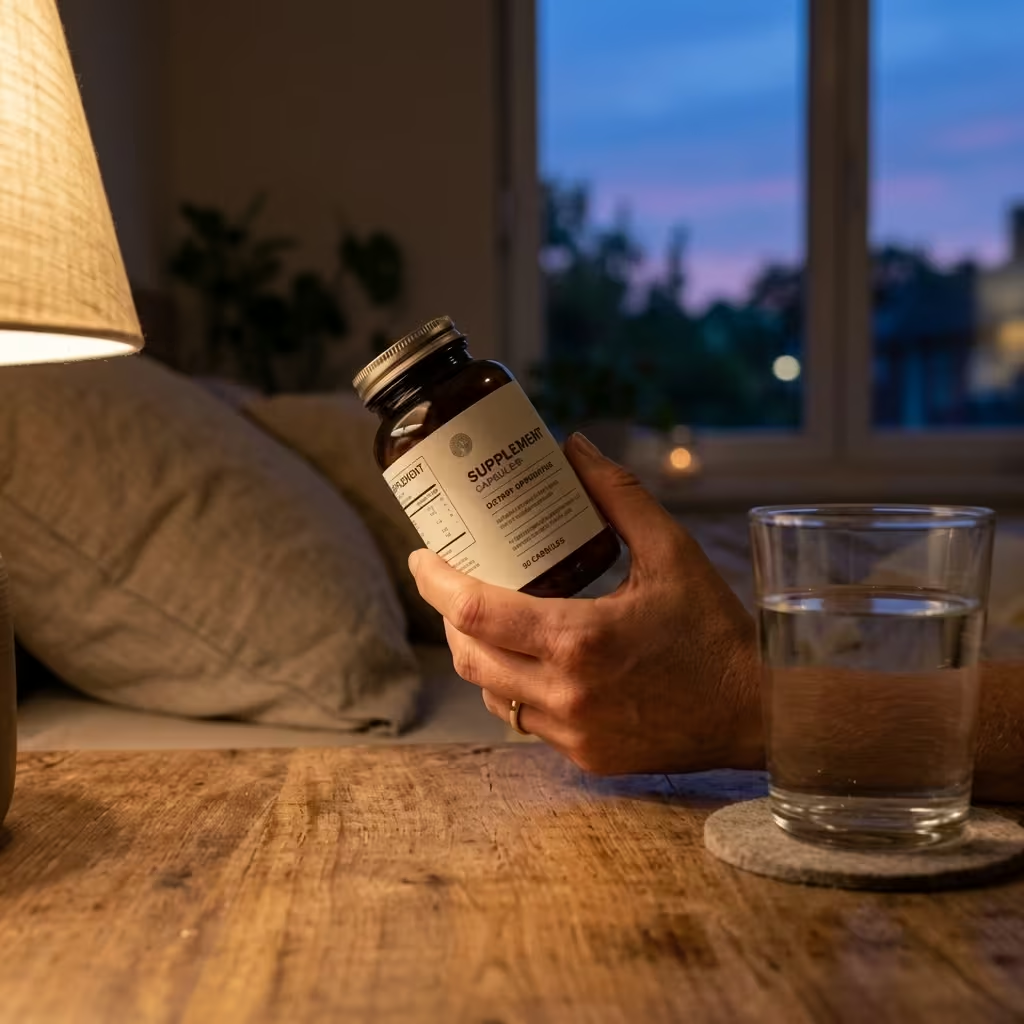
Quick Answer: L-theanine is an amino acid found in tea leaves that is widely marketed for relaxation. While it is not a sedative or a treatment for anxiety, small human trials suggest that doses around 200 mg may support a relaxed state and improve self-reported sleep quality in healthy adults. It is best viewed as a gentle, supportive option rather than a cure for sleep disorders.
L-theanine shows up on a growing number of sleep and stress labels, usually with promises of calm without drowsiness. The research is more measured. There are a handful of small human trials, some encouraging and at least one that found no benefit, and L-theanine is not a treatment for anxiety or insomnia.
This guide explains what it is, what studies have and have not found, and what to check before you buy. L-theanine is sold in doses ranging from a few dozen milligrams to several hundred, so the label matters more than the marketing. If you want to see how ZenvitaCo approaches evening routines as you read, you can browse our sleep supplements.
What Is L-Theanine?
L-theanine is an amino acid found naturally in tea leaves (Camellia sinensis) and in a few mushrooms. It is often credited with the calm-but-alert feeling many people associate with a cup of tea.
Researchers at the University of Oxford estimate that a cup of black tea contains only about 20 mg of L-theanine, well below the amounts used in most supplement studies. Supplements are commonly sold in capsules of 100 to 200 mg.
It is not a sedative. Early brain-wave research suggested that L-theanine may relax the mind without causing drowsiness, which is why it is usually discussed as a way to support a relaxed state rather than to force sleep. If you are building a broader routine, our guide to magnesium glycinate for sleep covers another ingredient often paired with it.
What the Research Says About L-Theanine and Relaxation
The evidence comes from several types of studies, and each has limits.
Brain-Wave Studies
In a 2008 study by Anna Nobre and colleagues at Oxford, healthy young adults who took 50 mg of L-theanine showed a greater rise in alpha-wave activity over the next 45 to 105 minutes than those given a placebo, and a second study replicated the effect.
Alpha waves are a brain rhythm linked to relaxed wakefulness. A later study in Nutrients also reported higher alpha activity at 50 mg and 200 mg, but the group was very small, and its authors noted that resting alpha activity is only a crude indicator of how someone actually feels.
Stress and Sleep in Healthy Adults
The most relevant human study for everyday stress is a 2019 randomized, double-blind, placebo-controlled crossover trial in Nutrients. It enrolled 30 healthy adults with an average age of about 48, who took 200 mg of L-theanine or a placebo daily for four weeks.
After L-theanine, scores for depression, trait anxiety, and overall sleep quality improved. Compared with placebo, the sleep measures for time to fall asleep, sleep disturbance, and use of sleep medication were also better, and verbal fluency and executive function scores rose.
Those are encouraging results, but they come with clear limits:
- Small and short: One trial, 30 people, four weeks. It says little about long-term effects.
- A branded ingredient: The study used a single branded form of L-theanine. Results may not carry over to every product.
- Self-reported measures: Sleep quality was scored on a questionnaire, not measured with clinical sleep monitoring.
- Not a clinical population: Participants were healthy adults with everyday stress, not people with a diagnosed anxiety or sleep disorder.

Objective Sleep Data
A 2011 trial in Alternative Medicine Review followed 98 boys aged 8 to 12 with ADHD for six weeks. Those taking 400 mg of L-theanine daily had better sleep percentage and sleep efficiency on wrist-worn activity monitors, but time to fall asleep did not change. That is a narrow, pediatric group, so it should not be applied directly to healthy adults.
Where the Evidence Falls Short
Not every study is positive. A 2019 randomized trial in the Journal of Psychiatric Research gave 450 to 900 mg of L-theanine, or a placebo, to adults with generalized anxiety disorder who were already taking an antidepressant. L-theanine did not beat placebo for anxiety or insomnia severity.
Small trials have also tested L-theanine together with caffeine, but those looked at attention and alertness rather than relaxation. We did not find a large, independent trial confirming the stress and sleep results in healthy adults, so L-theanine is best viewed as a gentle, supportive option, not a proven fix.
Safety and Who Should Check With a Doctor First
In short studies, L-theanine has been well tolerated. A TRC Healthcare monograph reports that doses of up to 900 mg daily have been used for 8 weeks, but long-term safety data is limited.
Several cautions apply:
- Blood pressure: L-theanine might lower blood pressure. If you take blood pressure medication or have low blood pressure, ask your doctor and monitor closely.
- Sedatives: The monograph advises caution with sedative medications and sleep aids.
- Pregnancy and breastfeeding: There is not enough reliable information to know whether it is safe.
- Children: Pediatric research is limited, so ask a pediatrician before giving it to anyone under 18.
- Combination formulas: Products that bundle L-theanine with other herbs or minerals bring each ingredient’s own precautions.
Talk with a doctor or pharmacist before starting if you take prescription medication or have a medical condition. If you have trouble sleeping most nights, or anxiety that interferes with daily life, get a medical evaluation rather than reaching for a supplement first, since both can have treatable causes.
How to Choose an L-Theanine Supplement
A few label checks separate a well-made product from a vague one. You can also read a guide about how to read ingredients before buying a supplement by ZenvitaCo
A disclosed dose: The best-documented dose in healthy adults is 200 mg a day. Look for the milligrams of L-theanine per serving, not just a combined weight for a blend.
- A clear name: The label should list L-theanine. A brand name is not required, although some studies used one.
- Third-party testing: Dietary supplements are not approved by the FDA before sale, so look for independent testing and a Certificate of Analysis you can request.
- Simple formulas: If L-theanine is combined with caffeine, herbs, or other amino acids, check each amount and ask whether you need all of them.
- Clear serving directions: Check how many capsules make one serving and follow the label.
- Realistic expectations: The best-known study ran for four weeks and relied on questionnaires. Do not expect a dramatic change overnight.
ZenvitaCo Sleep Supplements
Disclosure: ZenvitaCo sells the products mentioned in this article.
At ZenvitaCo, we offer sleep supplements designed to fit into your evening wellness routine. Our collection features formulas with ingredients such as magnesium, L-theanine, and chamomile, giving you options to consider when building a routine that suits your needs. If you are looking for a magnesium-focused option, our Magnesium Glycinate Capsules provide 400 mg of elemental magnesium per serving. Take a closer look at our product range to compare ingredients, review serving information, and find an option that aligns with your preferences. For an informed decision, always read the Supplement Facts panel and consult a healthcare professional before use, especially if you have kidney problems or take other magnesium products. You can also learn about the differences between magnesium forms in our guide to magnesium glycinate vs. magnesium citrate. We are not aware of clinical trials on any specific ZenvitaCo formula.

Frequently Asked Questions
What is L-theanine used for?
People take it to support relaxation, everyday stress, and sleep quality. In one small four-week trial, 200 mg a day was linked to better stress and sleep scores than placebo in healthy adults. The evidence is limited, and it is not a treatment for a medical condition.
How much L-theanine should I take for relaxation?
There is no official recommended amount. The best-known adult trial used 200 mg a day, and a brain-wave study found effects at 50 mg. Higher doses have been used for short periods in research. Start with the product label and ask your healthcare provider about the right amount for you.
Does L-theanine make you drowsy?
Research describes it as promoting relaxation without drowsiness, so it is not considered a sedative. Individual responses vary, and some reference sources note that it may cause sleepiness in some people. Avoid driving until you know how it affects you.
How long does L-theanine take to work?
In brain-wave studies, changes in alpha activity appeared roughly 45 to 105 minutes after a single dose. Studies of stress and sleep scores used daily dosing for four weeks. Effects on mood and sleep are likely to be gradual and subtle, and some people notice nothing.
Can I take L-theanine with coffee or caffeine?
Small trials have tested the pairing and looked at attention and alertness. If caffeine already makes you jittery or disrupts your sleep, L-theanine will not necessarily solve that, and late-day caffeine can still interfere with sleep.
Is L-theanine safe to take every day?
Short-term studies of up to eight weeks have not shown prominent safety concerns at commonly studied doses, but long-term data are limited. Ask your doctor first if you take blood pressure drugs or sedatives, are pregnant or breastfeeding, or have a health condition.
Is drinking tea enough to get the same effect?
Probably not. A cup of black tea contains about 20 mg of L-theanine, compared with the 200 mg used in the four-week trial. Tea also contains caffeine, which may not suit an evening wind-down.
Final Thoughts
L-theanine shows some early promise for relaxation and sleep, but the available human research remains limited. Some studies suggest potential benefits for self-reported sleep quality, while research in people with generalized anxiety disorder has not consistently shown improvements.
Before choosing a supplement, check the L-theanine amount per serving, look for transparent testing information, and consider your medications and health history. Consult a healthcare professional before use if you take medication or have an existing medical condition.
If you are considering adding a supplement to your evening routine. Take a look at ZenvitaCo’s sleep supplements to compare available formulas and ingredients. If you have questions about our products or need help finding the right option for your needs, feel free to contact our team.
This article is for general information and is not a substitute for professional medical advice. Dietary supplements are not intended to diagnose, treat, cure, or prevent any disease, and statements about them have not been evaluated by the FDA.
One thought on “L-Theanine for Relaxation: What the Research Actually Says”
Comments are closed.