

Blog
L-Carnitine L-Tartrate for Muscle Recovery: What the Research Shows

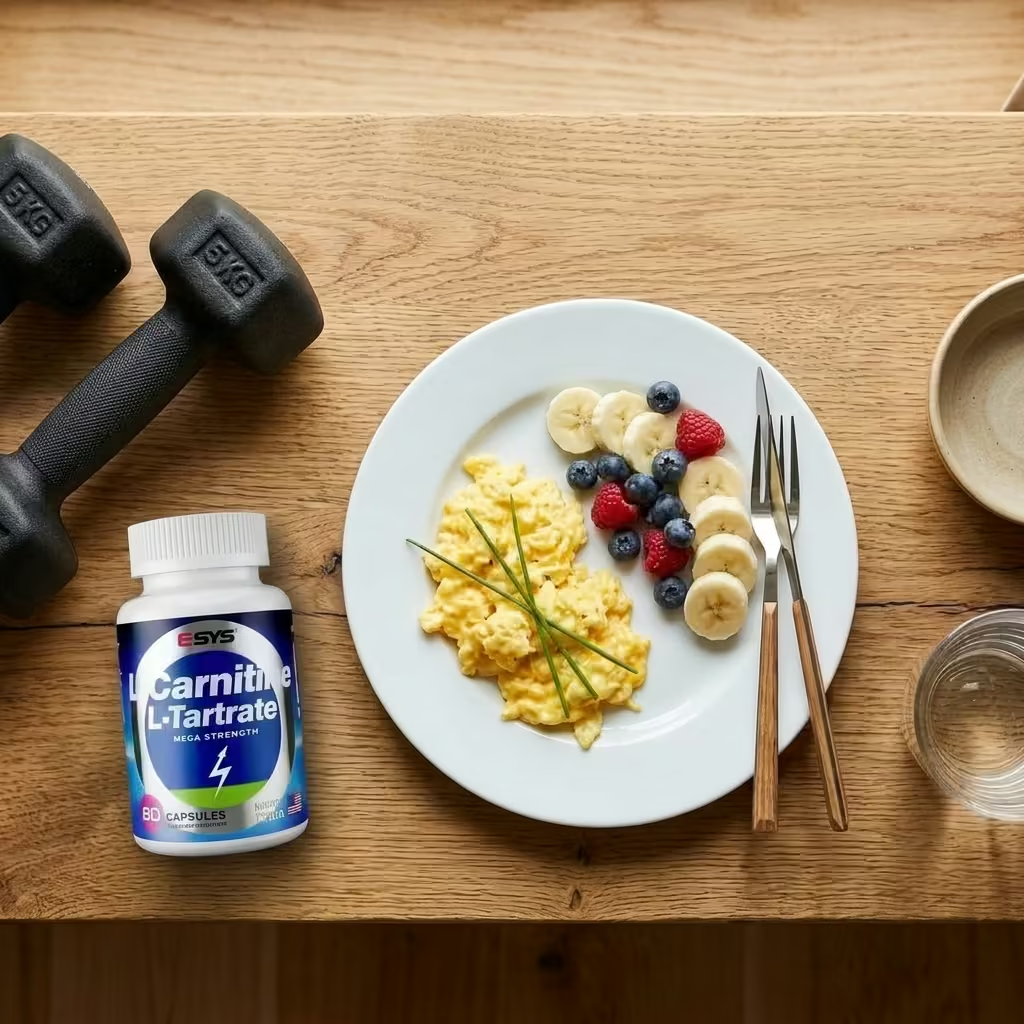
If your muscles take longer to bounce back than they did at 30, you are not imagining it. Recovery often slows with age, and many active men start looking for something that helps. L-carnitine L-tartrate (LCLT) is one of the more studied options in sports nutrition, and it is easy to find on supplement shelves and product pages.
The research is more modest than the marketing, though. This guide looks at L-carnitine L-tartrate for muscle recovery: what LCLT is, what clinical trials have and have not found about soreness, how doses and timing worked in those studies, and what to check on a label. It also covers safety, because some people should talk with a doctor first.
What Is L-Carnitine L-Tartrate?
L-carnitine is a compound your body makes on its own and also takes in from foods such as red meat. Its best-known job is helping move long-chain fatty acids into mitochondria, the parts of your cells that turn fuel into energy. That energy role is why researchers have tested it in people who train.
L-tartrate is the salt form attached to the carnitine in LCLT. According to the NIH Office of Dietary Supplements, the two main carnitine forms in supplements are L-carnitine (which includes the tartrate version) and acetyl-L-carnitine. This article focuses on LCLT because many of the recovery trials discussed below used it.
Why recovery? Hard training causes minor muscle disruption, oxidative stress, and a temporary dip in oxygen supply to working muscle. Researchers have tested whether carnitine can blunt those effects. A 2018 review of human trials reported links between carnitine supplementation and less muscle soreness, plus better blood flow after exercise. One caveat: scientists from Lonza, which makes a branded carnitine tartrate ingredient, conducted that review, according to Lonza’s own announcement. That does not make the findings wrong, but it is worth knowing when you weigh them.
What the Research Says About L-Carnitine L-Tartrate and Muscle Recovery
Two placebo-controlled trials are especially relevant for adults over 40:
- The 2010 trial (Ho and colleagues). Eighteen healthy, normally active adults (nine men averaging 45 and nine women averaging 52) took 2 g/day of carnitine for 3 weeks in a double-blind crossover design, then did a squat and leg press challenge. Markers of muscle disruption (myoglobin, creatine kinase) and free-radical formation were lower, and soreness was reduced. Strength and power did not change.
- The 2021 trial (Stefan and colleagues). Eighty men and women aged 21 to 65 took LCLT or a placebo for 5 weeks, then did an exercise challenge. The LCLT group reported better perceived recovery and soreness, had lower serum creatine kinase, and showed smaller declines in strength and power than the placebo group.
Those are encouraging results, with limits. The first trial was small, and it tested a branded Lonza ingredient. Both studies relied on blood markers and soreness ratings rather than long-term training outcomes.
The wider picture is mixed. The NIH notes that in trained athletes and active adults, carnitine improved performance and shortened recovery in some studies but not in others, and that more research is needed. The Australian Institute of Sport adds that short-term studies show no consistent effects, partly because the trials differ so much in length, training status, and test design.

Timing matters too. The Australian Institute of Sport reports that few studies have shown supplemental carnitine actually entering muscle, and the limited evidence suggests it took a large carbohydrate dose (80 g with each dose) over at least 12 weeks. Both recovery trials above ran 3 to 5 weeks and measured recovery markers rather than muscle carnitine levels. Either way, expect any effect to build over weeks, not show up after one dose.
Finally, what the evidence does not show: nothing here establishes that LCLT builds muscle or replaces training, sleep, or protein. In the 2010 trial, strength and power were unchanged.
How to Choose an LCLT Supplement
A few label checks make the difference between a useful product and a vague one:
- Form and elemental amount. Look for “L-carnitine L-tartrate” and a line showing how much carnitine you actually get per serving. The tartrate adds weight, so capsule weight alone can mislead. The 2010 trial used 2 g/day of carnitine.
- A dose you can justify. More is not better. Follow the label, and ask your doctor before going beyond it. Mild stomach upset can occur, and taking carnitine with meals may help.
- Consistency. The recovery trials ran for weeks. A bottle used sporadically is unlikely to match those conditions.
- Independent testing. Third-party testing helps confirm that what is on the label is in the bottle.
- Serving size. Check how many capsules make one serving. A per-capsule number may not equal the per-serving amount.
- Realistic expectations. In the trials, the benefit was less soreness and lower muscle-damage markers, not a dramatic change in strength. A higher price will not change that.
- Transparent blends. Skip “proprietary blends” that hide the carnitine amount.
Safety: Who Should Check With a Doctor First
Carnitine is well studied, but it is not risk-free. Gut bacteria convert carnitine into a compound the liver turns into TMAO, and carnitine supplements have been shown to raise fasting TMAO levels. TMAO has been proposed as a contributor to artery disease, though how much this matters for supplement users is still being worked out.
Check with a doctor or pharmacist first if you have a medical condition, take prescription medication (including blood thinners), or are pregnant or nursing. The NIH also advises telling your health care providers about every supplement you take. Men over 40 with cardiovascular risk factors have a particular reason to ask about TMAO.

Frequently Asked Questions
What does L-carnitine L-tartrate do for muscles?
LCLT is a form of carnitine, which helps muscle cells use fat for energy. In two placebo-controlled trials, supplementation was linked to lower markers of muscle damage and less soreness after hard exercise. The NIH notes that results across studies are mixed.
How long does it take to work?
Not right away. The recovery trials ran 3 weeks and 5 weeks. The Australian Institute of Sport notes that raising muscle carnitine levels appears to take weeks of consistent use.
How much LCLT should I take?
The 2010 trial used 2 g/day of carnitine. Products vary in how much carnitine each serving provides, so follow the label and ask your doctor before exceeding it.
Is LCLT better than regular L-carnitine for recovery?
Many recovery trials used LCLT, but we did not find a head-to-head comparison showing it is better than other forms. Compare the elemental carnitine amount and testing quality rather than assuming one form wins.
Is LCLT safe for men over 40?
Mild stomach upset can occur, and carnitine supplements can raise TMAO. Men with a medical condition, or who take prescription drugs, should talk to a doctor first.
When should I take LCLT?
The trials did not establish an ideal time of day. Taking carnitine with meals may help if it upsets your stomach. Pick a time you can keep consistent, since the studies ran for weeks.
Can I take LCLT with other supplements?
Many people combine supplements, but interactions are possible. Tell your doctor or pharmacist about everything you take, and avoid doubling up on more than one carnitine product.
Will LCLT build muscle or increase strength?
The evidence does not show that. In the 2010 trial, strength and power were unchanged. In the 2021 trial, declines in strength and power after an exercise challenge were smaller than with placebo. That is about recovery, not new muscle.
Final Thoughts
L-carnitine L-tartrate has some of the better-supported recovery research among sports supplements, but the evidence is still mixed, and the best trial results are modest: less soreness and lower muscle-damage markers after hard exercise, not bigger muscles. Give any product several weeks of consistent use, read the label for the carnitine amount, and talk with your doctor first if you take medication or have a health condition. When you are ready to compare formulas, ZenvitaCo’s Men’s Health Supplements category is a good place to start.
ZenvitaCo L-Carnitine L-Tartrate Capsules
ZenvitaCo L-Carnitine L-Tartrate capsules list 2,000 mg of LCLT per serving (two capsules). The product page directs one serving daily, preferably with food, and describes the formula as third-party tested and made in a cGMP-certified US facility, with a Certificate of Analysis available on request.
One detail to weigh: the page lists the weight of the LCLT salt rather than elemental carnitine, so it is not a like-for-like match with trials that dosed by carnitine content. Ask your doctor what amount suits you.
Looking at the bigger picture? Other options in the same category include L-Glutamine Powder and Shilajit Sea Moss. Whatever you choose, treat it as one piece of a routine that also includes sleep, protein, progressive training, and rest days.
Have Questions About L-Carnitine L-Tartrate?
If you need help understanding supplement ingredients, serving sizes, or product quality, contact the ZenvitaCo team for assistance before choosing a supplement.
This article is for general information and is not a substitute for professional medical advice. Dietary supplements are not intended to diagnose, treat, cure, or prevent any disease, and statements about them have not been evaluated by the FDA.