

Blog
Probiotics vs. Prebiotics: What’s the Difference?

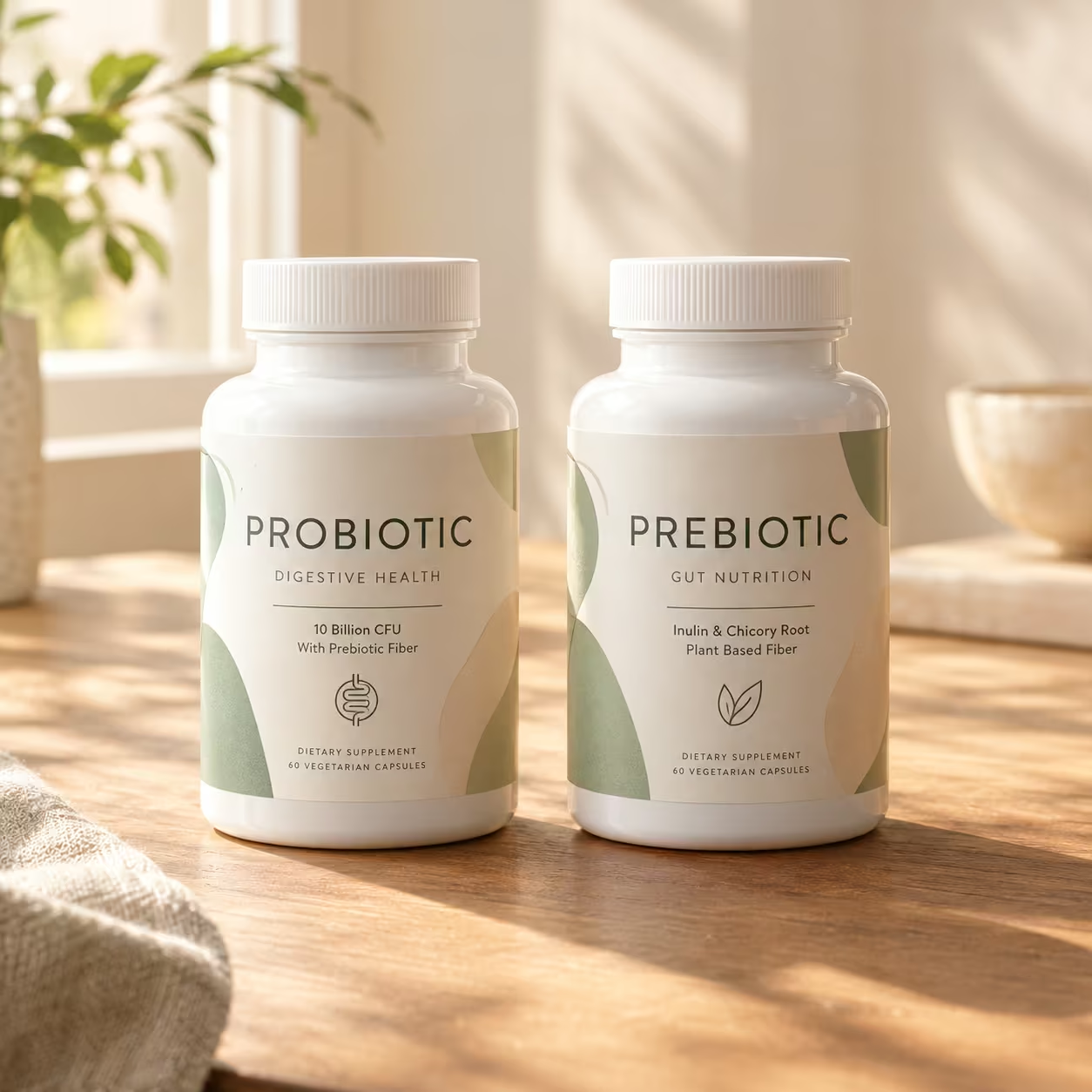
Probiotics and prebiotics sit side by side on the shelf. They differ by a single letter, and they do almost opposite jobs, so mixing them up is easy.
Here is the short version. Probiotics are live bacteria you add to your gut. Prebiotics are the fibers and compounds that feed the bacteria already living there. One supplies new arrivals; the other supplies groceries.
Both matter; neither is magic, and knowing which is which tells you whether you need a capsule, a grocery list, or both.
What Is the Difference Between Probiotics and Prebiotics?
The table gives the quick answer.
So, what is a probiotic?
| Feature | Probiotics | Prebiotics |
| What it is | Live microorganisms | Food for gut microorganisms, usually specific fibers |
| Alive? | Yes, it must be alive when you take it | No, it is not alive |
| Main job | Add studied bacteria for a defined job | Feed bacteria already living in your gut |
| Measured in | CFU, or colony-forming units | Grams |
| Found in | Fermented foods and probiotic supplements | Garlic, onions, leeks, asparagus, oats, beans, lentils, and slightly green bananas |
| Storage | Follow the label, as some need care to stay alive | Stable on the shelf; no refrigeration needed |
| Common early downside | Mild, brief digestive changes | Gas and bloating if you start too fast |
Probiotics are live microorganisms that, when consumed in adequate amounts, are linked to a health benefit. That is the consensus definition the International Scientific Association for Probiotics and Prebiotics settled on, reaffirmed in 2014.
The key words are live and benefit: the organisms must survive stomach acid, and they must have evidence behind them at the dose provided.

In practice, that means named species and strains. Examples include Lactobacillus rhamnosus GG and Bifidobacterium lactis. Doses are given in CFU, the colony-forming units that tell you how many living organisms a serving contains.
So, what is a prebiotic?
Prebiotics are not alive at all. The same scientific association defined them in 2017 as substrates that are selectively used by host microorganisms and confer a health benefit.
In plain terms, a prebiotic is food your own gut bacteria can use and most other things cannot. Most are specific fermentable fibers, such as inulin from chicory root, fructooligosaccharides from onions and bananas, galactooligosaccharides, and resistant starches from cooked and cooled potatoes or oats.
Because they are not living, they do not need refrigeration, do not die on the shelf, and are measured in grams rather than CFU. You also get them free with a varied diet, including garlic, leeks, asparagus, onions, slightly green bananas, oats, beans, and lentils.
Our ultimate guide to gut health gives the full tour of the ecosystem both of them act on.
What about postbiotics?
A third term, postbiotics, means preparations of inanimate microorganisms or their components. They are neither alive like probiotics nor food like prebiotics, and the category is newer and less settled, so most shoppers can leave it aside for now.
For the official definitions in full, see the International Scientific Association for Probiotics and Prebiotics.
How Do Probiotics and Prebiotics Work in Your Gut?
How do probiotics work while they pass through?
Probiotics act while they pass through. Most strains do not settle permanently, and their stay is measured in days.
During that visit, they may produce lactic acid, compete for nutrients and attachment sites, and interact with immune tissue lining the gut.
The best-studied uses cluster around digestive situations. A 2012 meta-analysis in JAMA, pooling 63 trials with 11,811 participants, found probiotics linked to a lower risk of diarrhea during antibiotic use.
Later reviews have found modest benefits for overall symptoms in irritable bowel syndrome. Effects are strain-specific, which is why researchers resist sweeping claims for the whole category.
How do prebiotics feed the bacteria already there?
Prebiotics act indirectly, by feeding residents. When gut bacteria ferment inulin or fructooligosaccharides, they produce short-chain fatty acids, mainly butyrate, propionate, and acetate.
Butyrate fuels the cells lining the colon, and these acids are linked to a calmer gut and more regular habits.
The most consistent finding across prebiotic trials is an increase in Bifidobacterium populations. Researchers treat that as a marker of a well-fed microbiome.
Trials often use a few grams a day and run for several weeks. Benefits beyond that marker, such as effects on appetite or blood sugar handling, are promising in some places but thinner.
What happens when you combine them?
Products that combine the two are called synbiotics. The idea has real logic behind it. Deliver the bacteria and their preferred food in the same capsule, and the arrivals may survive and act more reliably.
Some modern definitions go further and pair organisms with substrates chosen specifically for them. The limitations deserve equal billing, though:
- Microbiomes differ enormously, so the same dose that suits one person produces gas in another.
- Most probiotic effects are strain-specific and modest in size.
- Many trials are small or industry-funded.
- Neither probiotics nor prebiotics compensate for a diet with almost no fiber during the other hours of the day.
Fermentation also lowers colon pH slightly. That more acidic environment discourages some unwanted organisms, and it may improve mineral solubility. Small trials have shown increased calcium uptake with inulin type fibers in younger groups, but that is far too early to print on a label as a promise.
In short, probiotics add capability and prebiotics add capacity.
Which One Do You Actually Need?
For many people, the prebiotic side is best handled at the grocery store.
When is a probiotic the better first step?
A probiotic is the clearer first step when you have a specific, defined goal. Examples include:
- Support during or after antibiotics, where a studied strain has trial evidence.
- A digestive issue where a particular strain has been studied.
- A case where food alone cannot supply the strain you are looking for.
In those cases, the checks are strain names, dose in CFU, and a count guaranteed through shelf life. For a closer look at what to consider, our probiotic buying guide explains these factors in detail.
When is food the better first step for prebiotics?
Food is usually the better first step for prebiotics. Most adults eat far less fiber than the roughly 25 grams a day suggested for women and 38 grams a day suggested for men.
Closing that gap with food brings vitamins and variety no powder matches. Start with the foods in the table above and add them gradually.
Supplements become useful when your diet is restricted, your appetite is small, or you are closing a specific gap for a limited period.
What Should You Check Before You Buy?
Start by deciding which problem you are actually solving. That one decision prevents most wrong purchases.
What should a probiotic label show?
Look for these points, in this order:
- Named strains, not just a genus name.
- A clear CFU count per serving.
- A count guaranteed through shelf life, not only at manufacture.
- Storage instructions you can actually follow.
If a label hides the strain or the dose, you cannot compare it with the research. That alone is a reason to pass.
What should a prebiotic product show?
For a prebiotic product, read for dose in grams. Token sprinkles of inulin will not ferment into anything meaningful.
Also check what else came along for the ride. Gummies and drink mixes often carry several grams of added sugar, which somewhat defeats the purpose.
For combination products, ask whether each half is present at a level that resembles the research, or whether one is there mainly for the label.
What are the warning signs on a label?
The same habit serves you across the whole category. Watch for:
- Vague strain names with no dose.
- A prebiotic dose so small it could not ferment into a meaningful effect.
- Disease claims, such as a promise to treat or cure a condition.
- A premium price for a cheap fiber, with no convenience or thoughtful combination to justify it.
Browsing the gut health collection with these questions in mind makes the differences visible quickly. Timing is simpler than marketing suggests: probiotics are commonly taken with food, and prebiotic fibers with any meal you like, so build both around a routine you will actually keep.
Where Does a Supplement Fit In?
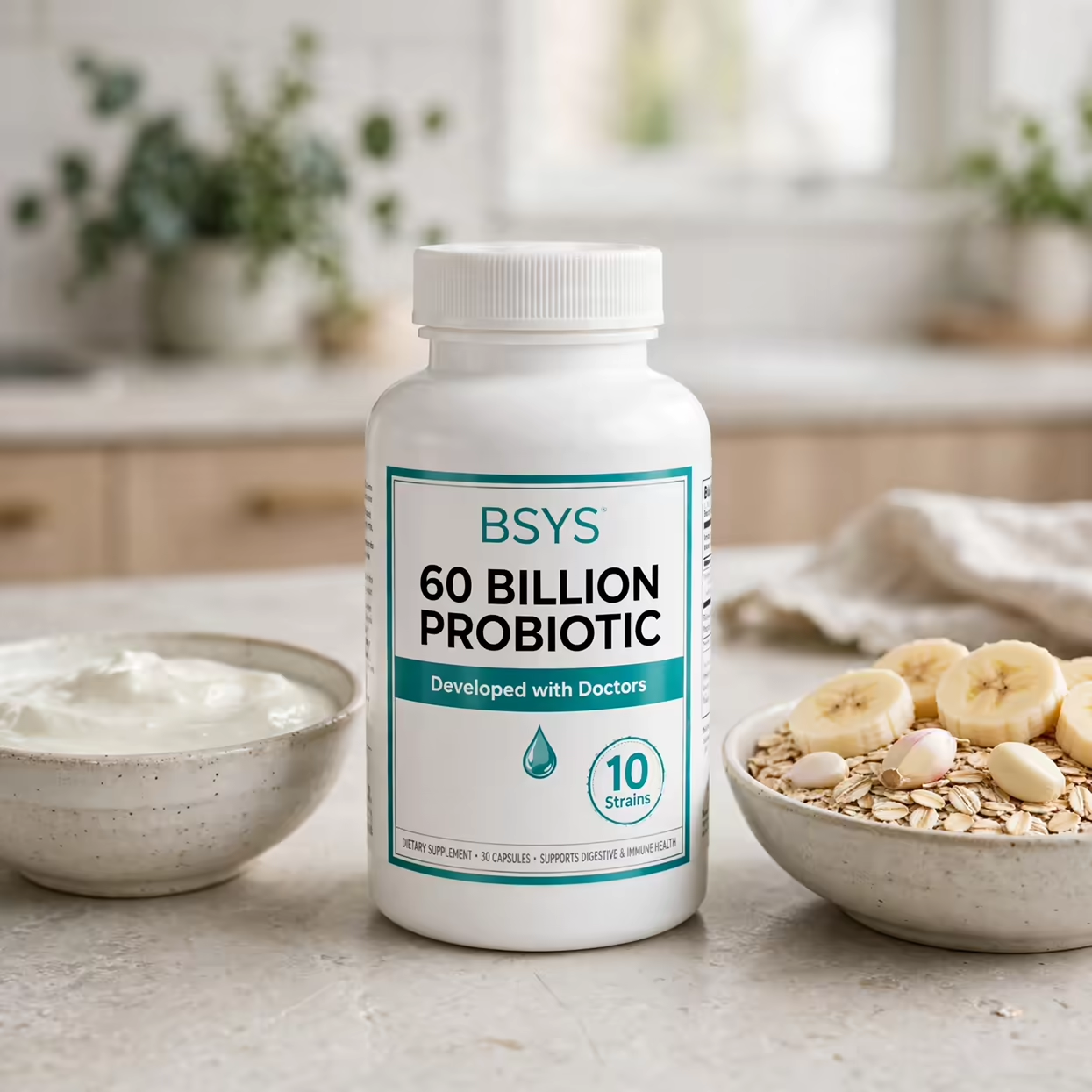
What does the 60 Billion Probiotic offer?
Disclosure: ZenvitaCo sells the products mentioned in this article.
Our 60 Billion Probiotic sits firmly on the probiotic side of this comparison. It offers:
- A multi-strain blend of Lactobacillus and Bifidobacterium
- 60 billion CFU per serving
- Delayed-release capsules
- Third-party testing for purity and potency
- Manufactured in the United States in a cGMP-certified facility
The formula also includes prebiotic fiber, but that does not turn it into a prebiotic product. Its main job is still to deliver live bacteria. For the feeding side, we would genuinely steer you toward the kitchen, because fiber from varied whole foods arrives with nutrients no capsule reproduces.
Pair a well-chosen probiotic with a fiber-rich diet, and you have assembled the synbiotic idea yourself, honestly.
Who Should Go Slowly, and When Should You Get Medical Advice?
Both categories are gentle for most healthy adults, but each has its own version of too much, too fast.
Why do prebiotics cause gas at first?
Prebiotic fibers are the common culprit behind early complaints. A full dose on day one can ferment enthusiastically and produce gas and bloating.
That risk is higher in people with irritable bowel syndrome or a sensitivity to FODMAP carbohydrates. The fix is usually simple:
- Start with a fraction of the dose, then increase over two or three weeks.
- Drink enough water, because fiber without fluid can worsen constipation.
Probiotics usually cause only mild, brief digestive changes.
Who should check with a clinician first?
The real caution applies to people with weakened immune systems, serious illness, or central venous lines. They should talk to a doctor before taking live bacteria.
Get medical attention, not a bigger supplement stack, if you notice:
- Persistent digestive symptoms.
- Blood in your stool.
- Fever with digestive symptoms.
- Unexplained weight loss.
Children, pregnancy, and long-term daily use are areas where the formal research is thinner. Involving your own clinician is a sensible default.
Questions about a specific product can come to us through our contact page. Medical questions belong with your clinician.
Frequently Asked Questions
Can I take probiotics and prebiotics at the same time?
Yes, and the combination has its own name: synbiotics. The logic is that feeding beneficial bacteria while adding studied strains gives both a better chance of doing useful work.
Introduce one at a time for a week or two, so if gas or bloating appears, you know which addition caused it.
Which one is better for bloating?
It depends on the cause, and the honest answer may surprise you. Prebiotics often make bloating worse before they make it better, because fermentation produces gas.
Probiotics have modest trial support for digestive comfort in some people. If bloating is your main complaint, change one thing at a time, start low, and give each change several weeks.
Is a prebiotic just fiber?
Not exactly. All common prebiotics are fibers or fiber-like compounds, but not every fiber is a prebiotic.
The scientific definition requires that gut microbes selectively use the substrate and that a health benefit follows. Some fibers mainly add bulk and pass through largely untouched.
That bulk is useful, but it is different from feeding specific beneficial bacteria.
Do probiotics need prebiotics to work?
No. Studied strains have shown effects in trials without added prebiotics, because an ordinary mixed diet already provides fermentable material.
A fiber-rich diet likely supports the broader gut community the probiotics are visiting. The two habits reinforce each other rather than depending on each other.
Think of prebiotics as improving the neighborhood, not as a condition of entry.
Can I get enough prebiotics from food alone?
Very often, yes. A diet built around vegetables, legumes, oats, onions, garlic, and fruit delivers a spread of prebiotic fibers alongside vitamins and minerals.
That is why food comes first here. Supplements help when your diet is restricted, your appetite is small, or you are closing a specific gap for a limited period.
How long before I notice a difference from either one?
Plan on weeks, not days. Trials of probiotics commonly run four to twelve weeks, and prebiotic studies usually measure changes over similar periods.
Your bacteria respond to steady feeding rather than single heroic doses, so consistency beats intensity. If nothing has changed after two or three honest months, reassess rather than escalating the dose.
The Bottom Line: What Should You Do Next?
What is the simple rule to remember?
Probiotics add live, studied bacteria to your gut for a defined stretch of work. Prebiotics feed the bacteria you already have, and most people can cover that side with food.
Confusing the two leads to buying the wrong tool. Separating them makes every label clearer. Choose probiotics by strain and evidence, choose prebiotics by dose and diet, increase either one gradually, and judge results over weeks rather than days.
If you want to compare products after that, start with the ZenvitaCo and use the label checks in this guide.
Start with your plate, choose a probiotic only for a clear reason, and give either change weeks, not days, to show what it can really do.
This article is for general information and is not a substitute for professional medical advice. Dietary supplements are not intended to diagnose, treat, cure, or prevent any disease, and statements about them have not been evaluated by the FDA.