

Blog
Ashwagandha for Stress and Vitality

Stress has a paperwork problem. It shows up as a short temper at 6 pm, a 3 am wake-up with a racing mind, training sessions that feel heavier than they should, and a libido that quietly clocks out.
So when an ancient Ayurvedic root gets modern trial results showing lower cortisol and calmer stress scores, people pay attention. The supplement industry, predictably, starts shouting. This article turns the volume down.
Ashwagandha has some of the better human evidence in the adaptogen category, particularly for perceived stress. The effects are real but modest, the quality gap between products is wide, and some people should not take it at all. What Is Ashwagandha?
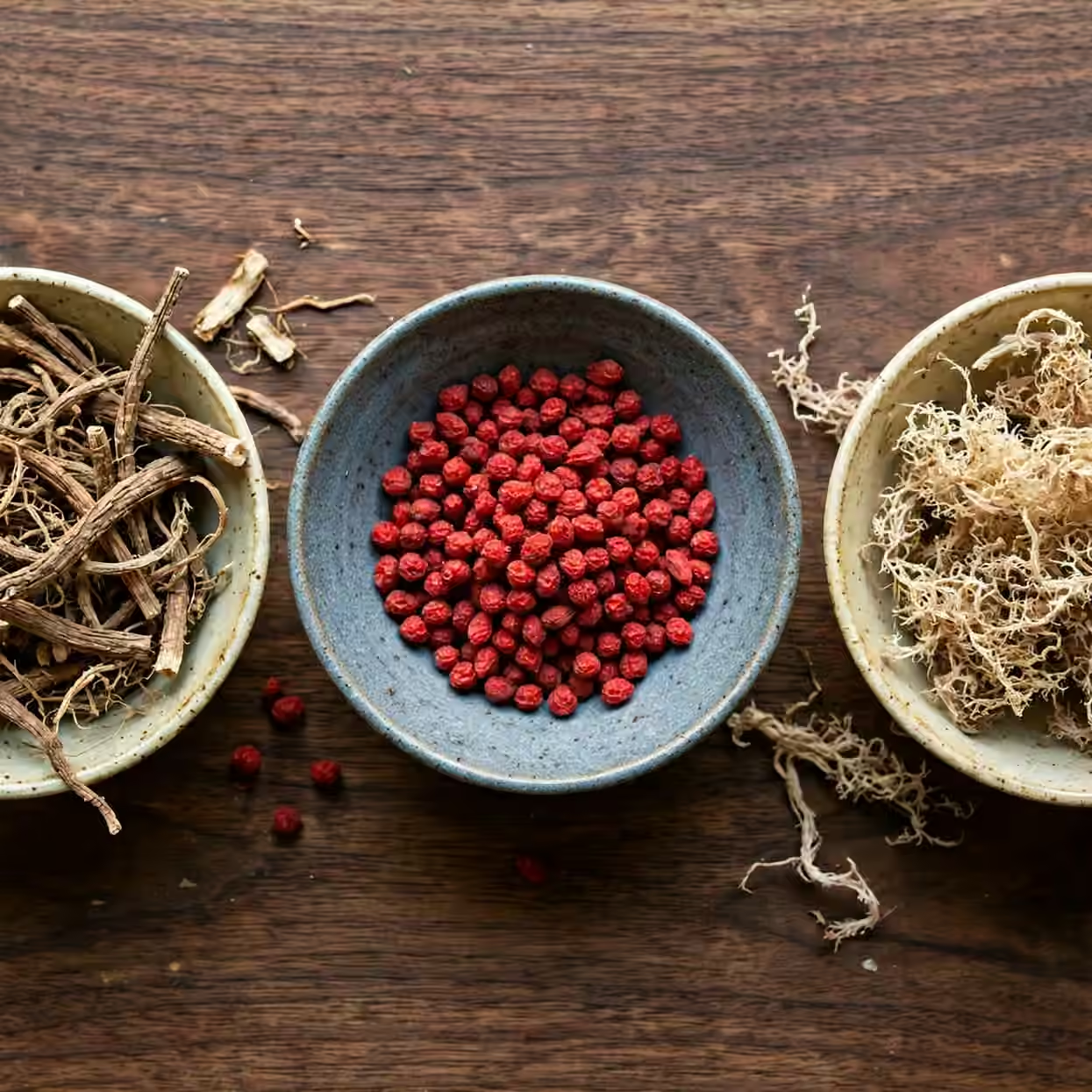
Ashwagandha is the root of Withania somnifera, a small shrub in the nightshade family. It grows across India, the Middle East, and parts of Africa. In Ayurvedic medicine, it is classed as a rasayana, a restorative tonic.
It has been used for more than 3,000 years for stress, poor sleep, flagging strength, and low vitality. Its name is Sanskrit for the smell of a horse, a nod to the root’s earthy odour and to the claim that it lends horse-like stamina.
What is in the root?
The active chemistry centres on withanolides, steroidal lactones concentrated in the root. Modern products are usually standardised extracts rather than raw root powder. That difference matters more than the brand name on the front of the bottle.
Two branded extracts dominate the research. KSM-66 is a root-only extract standardised to at least 5 percent withanolides, made using a traditional milk-based process. Sensoril is an extract of root and leaf, standardised to higher withanolide levels and used at lower doses.
When a trial says ashwagandha worked, it almost always means one of these standardised extracts at 240 to 600 mg a day. It does not mean a mystery blend with a sprinkle of root powder. That distinction decides whether a product has any relationship to the evidence at all.
Why does standardisation matter?
Withanolide content is normally measured by HPLC testing. A credible label states the percentage clearly, for example, 5 percent withanolides, along with the plant part used. Vague phrases such as full spectrum or premium blend, without a number attached, tell you the maker either did not test or did not like the result.
Ashwagandha is classed as an adaptogen, a substance proposed to help the body maintain balance under stress. The proposed mechanisms are plausible rather than fully proven.
It appears to moderate the hypothalamic-pituitary-adrenal axis, the hormonal circuit that produces cortisol. It also shows GABA-like and antioxidant activity in laboratory work.
How Does Ashwagandha Work, and What Do the Trials Actually Show?
What does the stress evidence show?
The stress evidence is the strongest chapter. In a widely cited trial by Chandrasekhar and colleagues, published in the Indian Journal of Psychological Medicine in 2012, 64 adults with chronic stress took 300 mg of KSM-66 twice a day or placebo for 60 days.
The ashwagandha group’s serum cortisol fell by 27.9 percent, against 7.9 percent on placebo. Their scores on stress and wellbeing scales improved substantially more than the placebo group’s scores.
Salve and colleagues reported a similar pattern in 2019: 60 adults taking 250 or 600 mg a day for eight weeks showed dose-related reductions in perceived stress and morning cortisol. Lopresti and colleagues, in a 2019 trial of 60 stressed adults using a 240 mg standardised root extract, also found reduced cortisol alongside improved stress and anxiety scores.
A 2022 systematic review and meta-analysis by Akhgarjand and colleagues, pooling the randomised trials, concluded that ashwagandha significantly reduced stress and anxiety measures compared with placebo.
What are the limits of that evidence?
- Short trials. Most trials run eight to twelve weeks, so long-term effects are still unclear.
- Small groups. Most trials enrol fewer than 100 people, so small differences can look larger than they are.
- Context and funding. Several trials were conducted in India, where the herb is culturally familiar, and several were funded by extract manufacturers.
Effects are meaningful but not dramatic. Think turning the volume down, not switching the noise off. Nobody serious claims ashwagandha replaces sleep, exercise, or treatment for an anxiety disorder.
What about strength, testosterone and energy?
The vitality and hormone story is smaller but real. In a 2015 trial by Wankhede and colleagues, 57 young men doing resistance training took 300 mg twice a day for eight weeks. They gained more strength and muscle size than the placebo group, with a larger rise in testosterone.
In a 2019 crossover trial by Lopresti and colleagues in 50 ageing, overweight men with mild fatigue, ashwagandha raised DHEA-S by 18 percent and testosterone by 14.7 percent compared with placebo periods.
These are nudges within the normal range, not transformations. They were seen in men whose levels had room to move. Energy and fatigue sit between the two stories.
Several stress trials also recorded better fatigue and vitality scores alongside the cortisol changes. That fits what users describe: not stimulation, exactly, but ordinary steadiness returning once the stress load drops.
That is also why ashwagandha disappoints people who take it like a pre-workout. It contains no caffeine and produces no kick. Its promise is a lower baseline of strain, and judging it by stimulant standards misses the point entirely.
Does it help sleep?
A 2021 meta-analysis by Cheah and colleagues found a small but significant improvement in overall sleep across five trials. The clearest benefit was at 600 mg a day and in people who started with insomnia.
If stress is what keeps your mind racing at night, that two-for-one logic is the appeal. If you want a gentler evening option, a calm routine built around tea leaf amino acids can help you wind down without drowsiness.
A magnesium-based sleep routine is another calm evening choice, and it suits people whose main problem is winding down rather than daytime stress.
What Should You Look for Before You Buy?
Use these five checks before you pay. They separate a product linked to the trials from one that only borrows the name. A short checklist for reading any label will help you apply the same checks to any supplement.
- A named, standardised extract. KSM-66, Sensoril, or another extract that states its withanolide percentage on the label. Standardisation is what connects the bottle in your hand to the trials above.
- A dose in the studied range. Most positive results sit between 300 and 600 mg a day of a standardised root extract, often split morning and evening. A proprietary blend that hides the ashwagandha amount cannot be judged and usually should not be trusted.
- Root, or root and leaf, stated openly. Leaf-heavy extracts are cheaper and chemically different. There is nothing automatically wrong with them, but you deserve to know which one you are buying.
- Third-party testing. Ayurvedic botanicals have a documented history of heavy metal contamination in poorly controlled supply chains. Independent testing for lead, mercury, and potency is not a luxury in this category. It is the entry ticket.
- Consistency over cycling. You will find confident advice online about cycling ashwagandha, two weeks on and one week off, or similar schemes. No trial has tested those patterns; they are gym folklore.
What the research did was boring and consistent: the same dose, every day, for eight to twelve weeks. If you want the outcome the studies measured, copy the method the studies used.
How do the main extracts compare?
| Extract | Plant part | Standardisation | Typical studied dose | Best matched goal |
| KSM 66 | Root only | At least 5 percent withanolides | 600 mg a day | Stress, strength and testosterone trials |
| Sensoril | Root and leaf | Higher withanolide levels | 125 to 250 mg a day | Calm and sleep-focused use |
| Raw root powder | Root, unstandardised | No stated percentage | Grams a day, varies widely | Traditional use, not trial-matched |
How should you use it day to day?
In practice, people take ashwagandha with food, morning or evening, and judge it over a full eight weeks. Track afternoon patience, sleep quality, and morning energy.
Judge it at eight weeks, not eight days. Anything promising a same-day transformation is describing a sedative, a stimulant, or a sales pitch, none of which is what this root does.
Where Does ZenvitaCo Fit In?
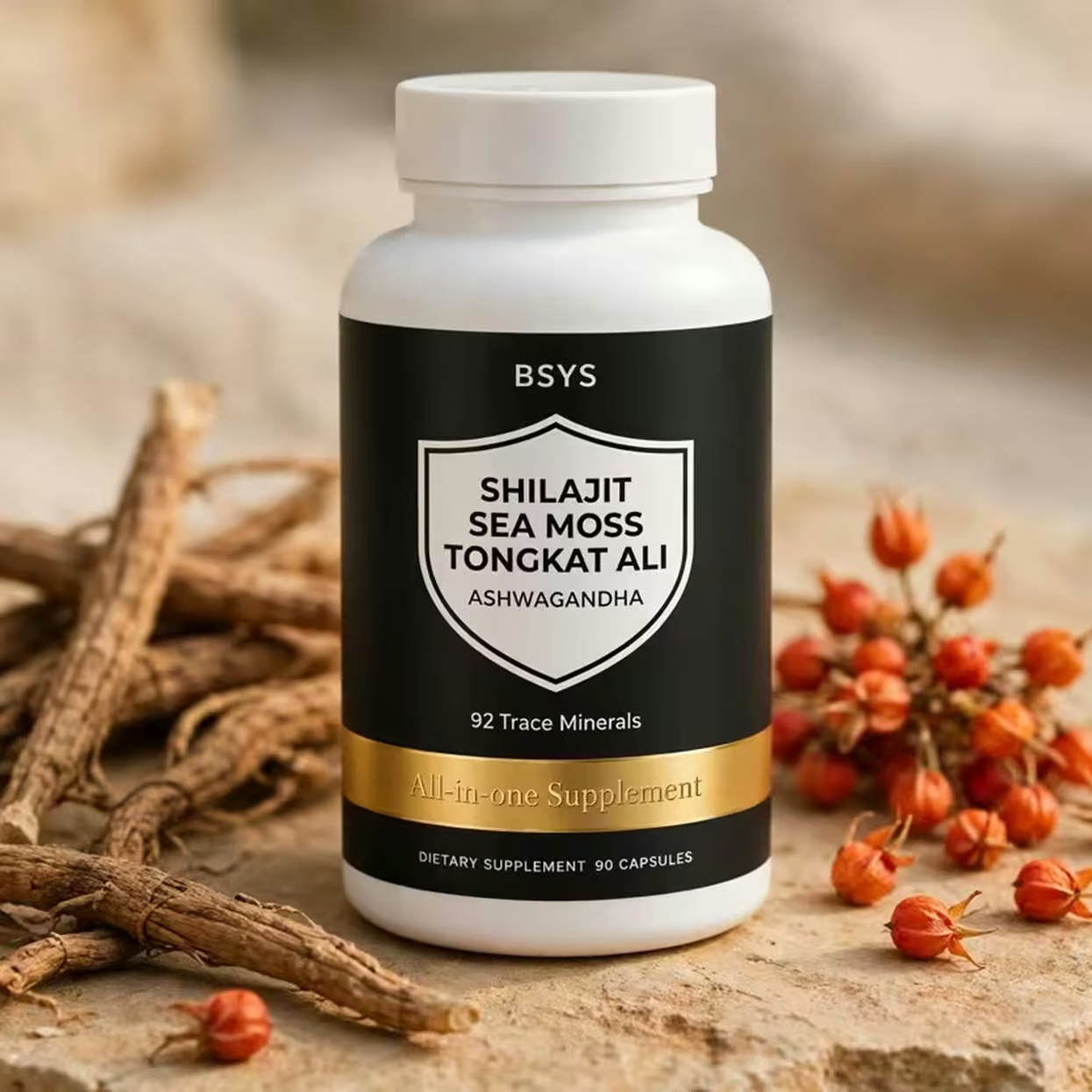
Honesty first: ZenvitaCo does not sell a standalone ashwagandha capsule, and we will not pretend otherwise. Ashwagandha appears in our range as part of the Shilajit Sea Moss formula, paired with shilajit and sea moss for daily energy, stress resilience, and vitality.
Those are the same goals the trials above studied. Full disclosure: ZenvitaCo sells the products mentioned in this article. If you want ashwagandha on its own at a full trial dose, buy a standardised extract using the checks above, from whoever sells it transparently.
If a combined daily formula suits your routine better, our combined daily formula sits in the wider range for daily vitality, alongside other formulas for energy and everyday wellbeing.
Who Should Be Careful With Ashwagandha?
Ashwagandha is generally well tolerated in trials lasting up to about three months. The common side effects are unglamorous: mild stomach upset, loose stools, and drowsiness in some people. The important cautions are specific.
- Thyroid. Ashwagandha can raise thyroid hormone levels. A small trial in subclinical hypothyroidism found improvements in T3 and T4, and case reports describe thyrotoxicosis in people who self-treated. Anyone with hyperthyroidism, or taking thyroid medication, should only use it with a doctor’s knowledge.
- Pregnancy and breastfeeding: avoid. The herb has a traditional reputation as an abortifacient and safety data do not exist, so it is also skipped while breastfeeding.
- Liver. Rare cases of liver injury linked to ashwagandha have been published, including a 2020 case series. Stop and seek advice if you develop jaundice, dark urine, or unusual fatigue.
- Surgery and interactions. Flag it before surgery and alongside sedatives, immunosuppressants, and diabetes medication, because additive effects are plausible. Autoimmune conditions are another talk to your doctor first category, since ashwagandha can stimulate immune activity.
For an independent check, read an official US health summary before you start, and take your full medication list to your doctor or pharmacist.
Frequently Asked Questions
How long does ashwagandha take to work?
The trials that found stress and cortisol benefits ran for eight to twelve weeks, with some participants reporting calmer sleep and steadier mood around week four. Judge it at eight weeks, not eight days.
What dose did the studies actually use?
Most positive trials used 300 to 600 mg a day of a standardised root extract, commonly 300 mg twice a day of KSM-66, or around 240 mg a day of a concentrated root and leaf extract. Raw root powder products dosed in grams are a different, less predictable preparation.
More than 600 mg a day is not better studied; it is just less studied.
Can ashwagandha raise testosterone?
Modestly, in the right men. The two best trials found increases of around 15 percent in ageing, overweight men with mild fatigue, and larger gains alongside resistance training in younger men.
Both started from unremarkable baselines, and neither suggests a meaningful rise in men whose levels are already healthy. Treat it as support for a stressed system, not as a hormone intervention.
Is it safe to take every day?
Trials used it daily for up to three months without serious safety signals in most participants, but long-term data beyond that are thin. A sensible pattern is a defined trial of eight to twelve weeks, a review of whether it earned its place, and periodic breaks rather than indefinite use.
Daily use also makes the thyroid and interaction cautions above more relevant, not less.
Who should avoid ashwagandha?
People who are pregnant or breastfeeding, anyone with hyperthyroidism or on thyroid medication without medical supervision, people scheduled for surgery in the next two weeks, and anyone taking immunosuppressants or strong sedatives should avoid it or clear it with a clinician first.
If you have a liver condition, the rare injury reports argue for medical guidance before starting.
KSM-66 or Sensoril, which is better?
They are different extracts with different strengths, not rivals with a clear winner. KSM-66 is root only, standardised to 5 percent withanolides, and carries most of the stress, strength, and testosterone trial data at 600 mg a day.
Sensoril includes leaf, is more concentrated, and is typically used at 125 to 250 mg a day, often positioned for calm and sleep. Choose the evidence that matches your goal, and the dose you will actually take consistently.
The Bottom Line
Ashwagandha is one of the rare botanicals with human trials worth reading: cortisol down in stressed adults, calmer stress scores across a meta-analysis, and small signals for sleep, strength, and testosterone in men who had room to improve.
It is also a category with real quality gaps and a specific list of people who should skip it. Buy a standardised extract, give it eight honest weeks, and measure something real. That approach respects both the research and your money.
Buy standardised, give it eight honest weeks, and measure something real.
This article is for general information and is not a substitute for professional medical advice. Dietary supplements are not intended to diagnose, treat, cure, or prevent any disease, and statements about them have not been evaluated by the FDA.