

Calcium Carbonate Benefits: Why It’s the Foundation of Strong Bones & Osteoporosis Prevention

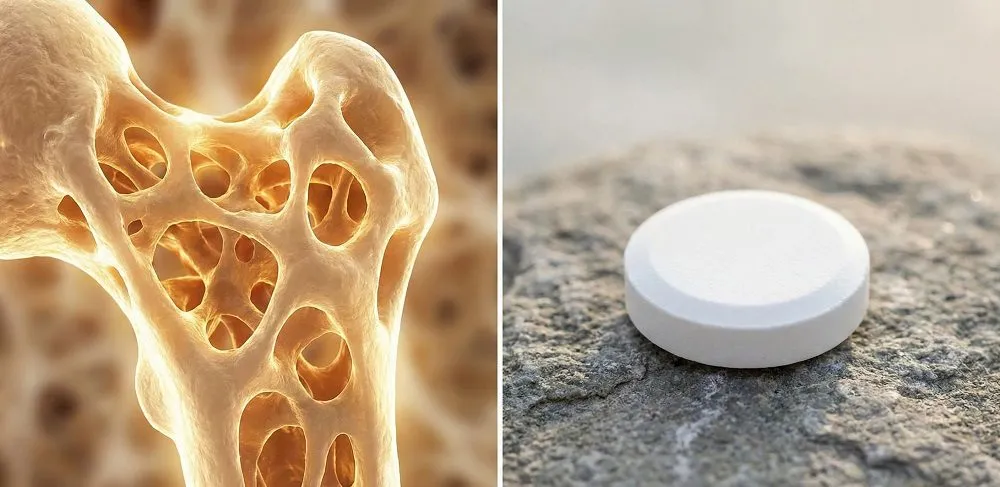
You know you need calcium. Your doctor has mentioned it, and you are likely aware that bone density naturally decreases with age.
But walking down the supplement aisle can be overwhelming. There are endless bottles, different chemical forms, and conflicting advice about absorption and side effects. You want to protect your bones, but you don’t want to waste money on pills that your body can’t use—or worse, ones that cause discomfort.
The solution is often simpler than marketing makes it seem. Calcium carbonate remains the gold standard for osteoporosis prevention for a reason: it is the most concentrated, efficient form of calcium available.
Here is why calcium carbonate is the foundation of effective bone health and how ZenVita Co. ensures you get the most out of every dose.
What is Calcium Carbonate? Understanding the Foundation
Calcium carbonate is a chemical compound found abundantly in nature. It makes up the shells of marine organisms, pearls, and eggshells. In the world of supplements, it is the most widely used form of calcium because of its high density.
When you see a calcium supplement on the shelf, it isn’t pure calcium. It is a compound. Your body has to break that compound down to get to the “elemental” calcium inside.
Calcium carbonate is like a high-density package. It carries a significant amount of the mineral you need in a relatively small container.
The “40% Advantage”: Why Calcium Carbonate Leads the Pack
Not all calcium pills are created equal. The most critical metric to look for is elemental calcium.
This is the actual amount of calcium your body can use for bone remodeling.
-
Calcium Carbonate contains 40% elemental calcium.
-
Calcium Citrate contains only 21%.
-
Calcium Gluconate contains a mere 9%.
Why does this matter?
Efficiency. Because carbonate is so concentrated, you can take fewer pills to reach your daily requirement (usually 1,000–1,200 mg).
With weaker forms like citrate or gluconate, you might need to swallow four or five large pills a day to get the same benefit. Calcium carbonate offers a lower “pill burden” and is generally more cost-effective.
The Science of Absorption: Making It Work for You
A common misconception is that calcium carbonate is “hard to absorb.” This is only true if you take it incorrectly.
Calcium carbonate is alkaline. To break it down effectively, it requires stomach acid (hydrochloric acid).
This is why the golden rule of calcium carbonate is: Take it with food.
When you eat, your stomach produces acid to digest the meal. This acid dissolves the calcium carbonate, releasing the elemental calcium so it can enter your bloodstream.
The Critical Role of Vitamin D3 & K2
Absorption is a team effort. You cannot build a house with just bricks; you need a mason.
-
Calcium is the brick.
-
Vitamin D3 is the key that unlocks the door, allowing calcium to move from your gut into your blood.
-
Vitamin K2 directs that calcium into the bones and keeps it out of your arteries.
At ZenVita Co., we emphasize this synergy. That is why we recommend pairing your calcium regimen with our Vitamin D3 K2 for Bone & Heart Support. This specific combination ensures the calcium you take actually reaches your skeletal system rather than settling in soft tissues.

Vitamin D3 K2 for Bone & Heart Support
Calcium Carbonate vs. Calcium Citrate: Which One Do You Need?
Is carbonate right for everyone? Mostly, yes. But there are exceptions.
If you are on strong acid-suppressing medication (like PPIs) or have extremely low stomach acid, you might have trouble breaking down carbonate. For the vast majority of adults, however, carbonate is the superior choice due to its potency.
Here is a quick comparison to help you decide:
| Feature | Calcium Carbonate | Calcium Citrate |
| Elemental Calcium | High (40%) | Low (21%) |
| Pill Count | Fewer pills needed | More pills needed |
| Best Taken | With meals (requires acid) | Empty stomach or with meals |
| Cost | Generally more affordable | Often more expensive |
| Best For | Most adults, healthy digestion | People on acid blockers, elderly with low acid |
Addressing the Myths: Kidney Stones and Heart Health
You may have read scary headlines linking calcium to kidney stones. Let’s look at the facts.
Kidney stones are often formed from calcium oxalate. Ironically, taking calcium carbonate with meals can actually reduce this risk.
When you take calcium with food, it binds to oxalates (found in spinach, chocolate, nuts) in your stomach and intestine. This prevents the oxalates from being absorbed and traveling to the kidneys.
Key takeaway: Timing matters. Taking your supplement with food is the safest strategy for both absorption and kidney health.
How to Take ZenVita Co. Calcium for Maximum Results
To get the best results from your ZenVita Co. regimen, follow these simple steps:
-
Split the Dose: Your body struggles to absorb more than 500 mg of calcium at once. If your daily target is 1,000 mg, take 500 mg with breakfast and 500 mg with dinner.
-
Pair with Food: Always take your tablet with a meal to ensure adequate stomach acid.
-
Check Your D3: Supplement with Vitamin D3 K2 for Bone & Heart Support to guarantee proper absorption.
-
Stay Hydrated: Drink plenty of water throughout the day to support kidney function.
Frequently Asked Questions (FAQ)
Is calcium carbonate good for osteoporosis?
Yes, it is the most concentrated form of calcium available. It delivers 40% elemental calcium, making it highly effective for rebuilding bone density when taken with food to aid absorption.
What is the difference between calcium carbonate and calcium citrate?
The main difference is concentration and acid requirement. Carbonate has more calcium (40%) but needs stomach acid (take with food). Citrate has less calcium (21%) but absorbs easily on an empty stomach.
Does calcium carbonate cause kidney stones?
Not if taken correctly with meals. Taking it with food allows calcium to bind with oxalates in the gut, preventing them from reaching the kidneys and actually reducing stone risk.
How much calcium carbonate should I take for osteoporosis?
Aim for 1,000 to 1,200 mg daily, split into two doses. The body only absorbs about 500 mg at a time, so taking a morning and evening dose is most effective.
Why do I need Vitamin D with calcium carbonate?
Vitamin D is essential for calcium absorption. Without sufficient Vitamin D, your body cannot transport calcium from the intestine into the bloodstream, rendering the supplement ineffective for bone health.
Ready to build a stronger foundation?
Don’t leave your bone health to chance. Visit ZenVita Co. to explore our range of high-quality supplements designed to support your active life.
