Blog
Probiotics vs. Prebiotics: What’s the Difference and Do You Need Both?

You’ve likely heard the terms thrown around in every health conversation. You know they are good for you. You know they relate to your gut.
But if you are standing in the supplement aisle or browsing online, the confusion sets in. Do you need the “live bacteria” (Probiotics)? Or do you need the “fiber” that feeds them (Prebiotics)? Or do you need to overhaul your entire diet?
The confusion is common, but the answer is critical. Ignoring one while taking the other is often the reason many people don’t see the results they expect.
This guide breaks down exactly how these two powerhouses work, why they are different, and how to combine them to restore your gut health effectively.
The Basics: What Are Probiotics and Prebiotics?
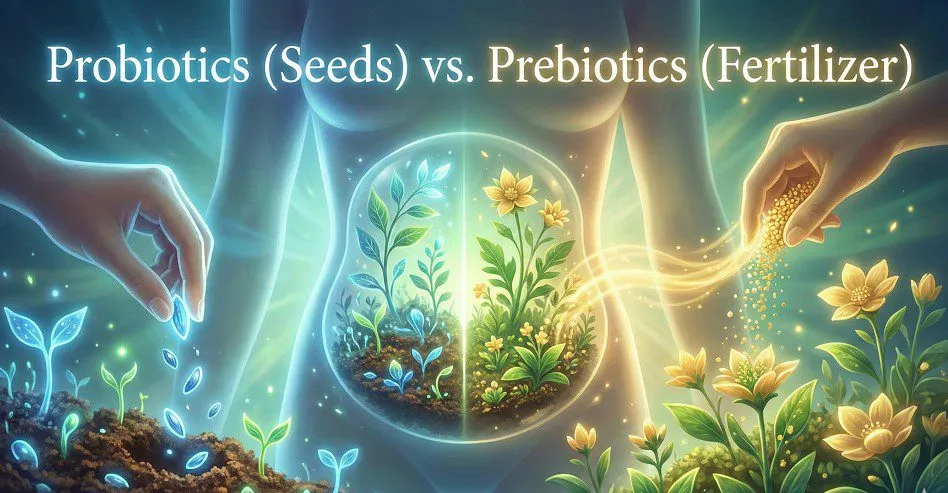
Think of your gut microbiome as a garden. To have a thriving garden, you need two things: healthy seeds and nutrient-rich fertilizer. You cannot have a lush garden with just one or the other.
What are Probiotics? (The Seeds)
Probiotics are live beneficial bacteria—living microorganisms—that you introduce into your body. They are the “seeds” of your gut garden. When you take a probiotic supplement, you are adding good workers to your digestive tract to fight off harmful bacteria, improve digestion, and boost immunity.
Common strains include Lactobacillus and Bifidobacterium.
What are Prebiotics? (The Fertilizer)
Prebiotics are types of dietary fiber that your body cannot digest. Since you can’t digest them, they travel to your lower digestive tract intact. Once there, they act as “food” or fertilizer for the healthy bacteria (probiotics) already living in your gut.
Without prebiotics, the probiotics you take may starve and die off before they can colonize your gut. Common sources include inulin and complex carbohydrates found in garlic, onions, and bananas.
The Main Differences: A Side-by-Side Comparison
If you are scanning for a quick answer, this breakdown explains the core differences between the two.
| Feature | Probiotics | Prebiotics |
| What are they? | Live beneficial bacteria (microorganisms). | Non-digestible fibers (carbohydrates). |
| Main Function | Adds new “good” bacteria to your gut population. | Feeds the “good” bacteria so they can grow. |
| Survival | Fragile. Can be killed by heat, stomach acid, or time. | Hardy. Not affected by heat or stomach acid. |
| Key Benefit | Fights bad bacteria, aids digestion, boosts immunity. | Stimulates growth of gut flora, improves metabolic health. |
| Found In | Yogurt, fermented foods, Zenvitaco 60 Billion Probiotic. | Garlic, onions, asparagus, bananas, oats. |
The “Synbiotic” Effect: Why You Likely Need Both
The question isn’t “which one is better?” The real answer lies in synergy.
When you combine probiotics and prebiotics, you create what is known as a Synbiotic.
If you take a high-quality probiotic but your diet is high in sugar and low in fiber, those new bacteria land in a hostile environment. They have no food. They struggle to survive.
Conversely, if you eat tons of prebiotic fiber but your gut is already overrun with bad bacteria (dysbiosis) from stress or antibiotics, you are just feeding the wrong crowd. This can sometimes lead to more gas and bloating.
The Solution:
For most people, the most effective strategy is to re-seed the gut with a potent probiotic while simultaneously introducing prebiotic foods. This ensures the new bacteria have an immediate fuel source to colonize your gut and crowd out the bad bacteria.
Food vs. Supplements: Is Diet Enough?
“Can’t I just eat yogurt?”
It’s a fair question. Ideally, we would get everything we need from food. However, modern food processing makes this difficult.
The Limitation of Food
Many commercial yogurts are pasteurized, a heat process that kills the bad bacteria but also destroys the good probiotics. Unless the label explicitly says “live and active cultures,” you might just be eating sugary milk. Furthermore, to get a therapeutic dose of beneficial bacteria—often measured in the billions—you would need to eat an unrealistic amount of fermented food daily.
The Power of Precision Supplementation
When you are trying to fix an issue—like bloating, irregularity, or post-antibiotic recovery—diet alone acts slowly. A high-CFU supplement provides a “mega-dose” of beneficial soldiers to retake the territory quickly.
This is why we formulated the 60 Billion Probiotic. It delivers a high-potency dose designed to survive stomach acid and reach the gut where it’s needed most. It offers the “reset” button that food alone often cannot provide.

60 Billion Probiotic for Complete Gut Health
How to Choose the Right Gut Health Supplement
Not all supplements are created equal. The supplement industry is vast, and quality varies wildly. Here is your checklist for choosing a product that actually works:
CFU Count: Look for at least 20-50 Billion CFUs for maintenance, and 60 Billion+ for restoration.
Strain Diversity: Single strains are less effective. Look for a multi-strain formula (like Lactobacillus AND Bifidobacterium) to address different parts of the gut.
Survivability: Ensure the capsule is designed to resist stomach acid.
No Unnecessary Fillers: Avoid products with artificial colors or excessive binders.
If you are looking for a complete system, consider pairing a daily probiotic with a periodic cleanse. The 7 Day Colon Cleanse clears out accumulated waste, creating a clean slate for your 60 Billion Probiotic to work effectively.
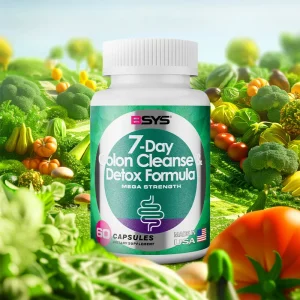
7 Day Colon Cleanse & Detox Formula
Side Effects and How to Start Safely
When you start a new gut health regimen, your body may react. This is normal.
As you introduce good bacteria, they begin to kill off the bad bacteria and yeast. This war in your gut can temporarily release gas. You might experience mild bloating, stomach gurgling, or changes in bowel movements for the first few days.
How to Minimize Discomfort:
Hydrate: Water is essential for moving waste and fiber through your system.
Consistency: Take your supplement at the same time every day.
Patience: These symptoms are usually a sign that the product is working. They typically subside within 3 to 5 days.
Conclusion: The Verdict on Gut Health
You don’t have to choose between probiotics and prebiotics. Your body craves both.
Probiotics plant the garden. Prebiotics feed it.
If you are ready to stop guessing and start healing your gut, focus on high-quality sources for both. Eat your onions and bananas, but ensure you have the “seeds” to make use of them.
Ready to reset your gut?
Start with the Zenvitaco 60 Billion Probiotic today and give your body the balance it deserves.
Frequently Asked Questions (FAQ)
Q1: What is the main difference between probiotics and prebiotics?
Probiotics are live bacteria; Prebiotics are fiber food.
Probiotics add beneficial microorganisms to your gut to fight bad bacteria. Prebiotics are non-digestible fibers that act as fertilizer, feeding those good bacteria so they can thrive.
Q2: Do I need to take probiotics and prebiotics at the same time?
You don’t have to, but it is highly recommended.
Taking them together (called Synbiotics) ensures the probiotics have an immediate food source. This improves their survival rate and helps them colonize your gut faster than taking probiotics alone.
Q3: Can I take probiotics if I am already eating prebiotic foods?
Yes, and it is often necessary.
Even with a perfect diet, factors like stress, age, and antibiotics deplete your natural flora. A supplement like Zenvitaco 60 Billion Probiotic quickly repopulates the bacteria that your healthy diet can then sustain.
Q4: Which is better for bloating: probiotics or prebiotics?
Probiotics are generally better for immediate relief.
Bloating is often caused by an imbalance (dysbiosis). Probiotics help correct this balance. Adding too much prebiotic fiber too quickly can sometimes worsen bloating initially, so start with probiotics first.
Q5: What are the side effects of starting probiotics?
Mild gas and bloating are common initially.
This is often a “die-off” symptom where bad bacteria are being crowded out. It typically resolves in a few days. Staying hydrated helps your body adjust more quickly.