

Beyond Cholesterol: Why Vitamin K2 is the Missing Link for Cardiovascular Health

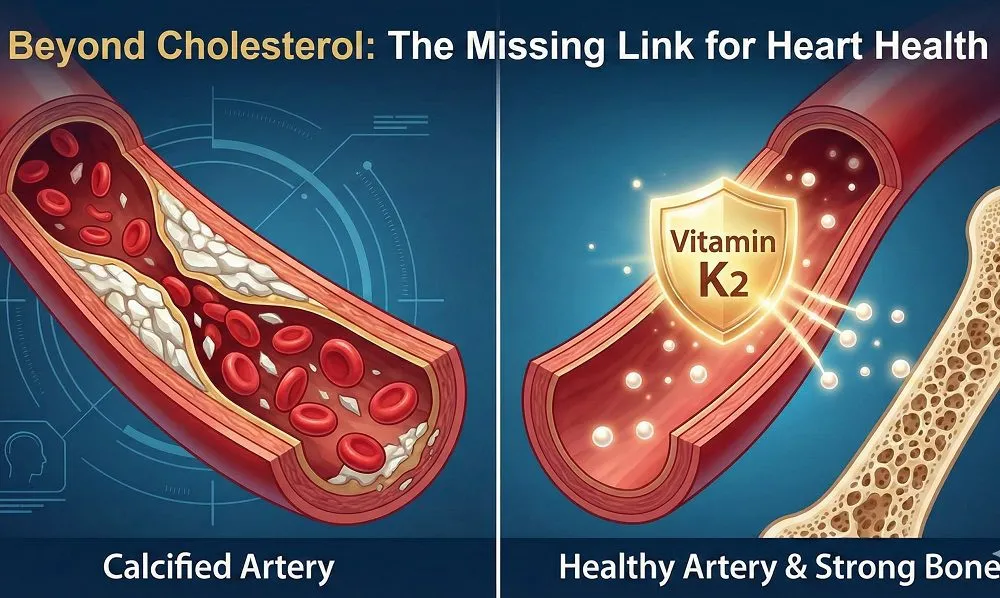
For decades, the conversation around heart health has focused almost entirely on one thing: cholesterol. We obsess over LDL levels, cut out fats, and track our numbers religiously. But while you were watching your cholesterol, another silent threat may have been stiffening your arteries.
The problem isn’t just about what is clogging your arteries; it’s about what is hardening them.
Calcium is essential for strong bones, but when it ends up in your blood vessels instead of your skeleton, it causes arterial calcification. This loss of flexibility increases the workload on your heart significantly. The solution isn’t to stop taking calcium; it is to direct it to the right place.
This is where Vitamin K2 comes in. It acts as the biological “traffic cop” for your cardiovascular system, ensuring your arteries stay flexible and your heart stays strong.
The Calcium Paradox: Are You Calcifying Your Arteries?
We face a biological contradiction known as the Calcium Paradox. This occurs when a person suffers from weak bones (osteoporosis) and hardened arteries (calcification) simultaneously.
It seems counterintuitive. How can you have too little calcium in your bones but too much in your vessels?
The answer lies in transport. Calcium is a mineral that needs a guide. Without that guide, calcium drifts passively into soft tissues, including the delicate inner lining of your arteries. Over time, these deposits turn into plaque, similar to hard water scale building up inside a pipe. This turns a flexible, elastic vessel into a stiff, rigid tube.
The Science: How Vitamin K2 Activates Matrix GLA Protein (MGP)
You might wonder, “Doesn’t my body have a defense against this?” Yes, it does. It is a protein called Matrix GLA Protein (MGP).
MGP lines your blood vessels and is the most potent inhibitor of vascular calcification known to science. However, there is a catch: MGP is produced in an inactive state. It’s like having a security guard asleep on the job.
Vitamin K2 is the wake-up call.
Through a chemical process called carboxylation, Vitamin K2 activates MGP. Once awake, active MGP binds to free calcium in the bloodstream and physically escorts it away from the vessel walls.
- Without K2: MGP remains inactive; calcium deposits freely.
- With K2: MGP is activated; calcium is repelled from arteries.
Synergy: Why You Should Never Take Vitamin D3 Without K2
Many people supplement with Vitamin D3 to support their immune system and bone health. While beneficial, high doses of Vitamin D3 increase the amount of calcium your intestines absorb.
If you increase calcium absorption (via Vitamin D) but lack the director (Vitamin K2), you risk accelerating the very calcification you want to avoid. They must work in tandem.
Here is a breakdown of how the nutrients interact:
| Feature | Vitamin D3 Alone | Vitamin D3 + Vitamin K2 |
| Primary Action | Absorbs calcium from food into the blood. | Directs calcium from blood into bones. |
| Arterial Risk | Moderate risk of calcium settling in soft tissue. | Protects arteries by inhibiting deposits. |
| Bone Benefit | Increases raw material (calcium) availability. | Actively strengthens bone matrix (Osteocalcin). |
| Safety Profile | Potential for toxicity at very high doses. | Balanced profile; K2 mitigates toxicity risks. |
Why “Good Cholesterol” Isn’t Enough: The Role of Arterial Flexibility
Cardiovascular health is not static. Your arteries need to expand with every heartbeat to handle the pressure of blood flow. This is called Arterial Flexibility.
As we age, or if calcification occurs, that flexibility is lost. This is often measured by Pulse Wave Velocity—the speed at which pressure waves travel through your arteries. Stiffer arteries mean faster waves and higher blood pressure.
By ensuring MGP remains active, Vitamin K2 directly supports the maintenance of this elasticity. It helps keep the vessel walls soft and compliant, allowing your heart to pump efficiently without unnecessary resistance.
Sources & Supplements: Getting the Right Dosage
Can you just eat your way to healthy arteries? It is difficult.
The form of Vitamin K2 most effective for heart health is MK-7 (Menaquinone-7). It has a longer half-life than other forms, meaning it stays in your bloodstream longer to activate those crucial proteins.
The richest food source of MK-7 is Nattō, a fermented Japanese soybean dish with a pungent smell and slimy texture that many find unpalatable. Western diets are virtually void of MK-7.
To achieve the therapeutic benefits seen in clinical studies—typically 180mcg of MK-7 daily—high-quality supplementation is often the only consistent option.
Pro Tip: Always check with your doctor before starting K2 if you are currently taking blood-thinning medication like Warfarin, as Vitamin K can affect how these drugs work.
Frequently Asked Questions (FAQ)
Does Vitamin K2 remove existing plaque from arteries?
No, but it prevents new buildup.
While Vitamin K2 cannot scrub away old, fibrous plaque, it activates MGP to stop new calcium deposits from hardening.10 This stops the progression of arterial stiffness and stabilizes your current cardiovascular health.
How much Vitamin K2 should I take for heart health?
180 micrograms (mcg) to 360 mcg daily.
Most arterial health studies utilize the MK-7 form at these dosages. This amount is sufficient to maximize the activation of MGP and Osteocalcin proteins in the average adult.
Can I just take Vitamin K1 instead?
No, they have different jobs.
Vitamin K1 (found in leafy greens) travels primarily to the liver to help with blood clotting.11 Vitamin K2 (specifically MK-7) travels to the peripheral tissues—bones and blood vessels—to manage calcium.12 K1 does not offer the same arterial benefits.
Is Vitamin K2 safe to take every day?
Yes, it is considered safe for long-term use.
Vitamin K2 has a low toxicity profile.13 Since it is a fat-soluble vitamin, it is best taken with a meal containing some fat (like avocado, eggs, or fish oil) to ensure your body absorbs it fully.14
Strengthening Your Foundation
Your heart health strategy needs to evolve beyond just managing cholesterol. By addressing arterial calcification, you are tackling one of the root causes of cardiovascular aging.
Check the label of your current supplements. If they don’t include both Vitamin D3 and Vitamin K2 (MK-7), you might be missing the most critical piece of the puzzle.
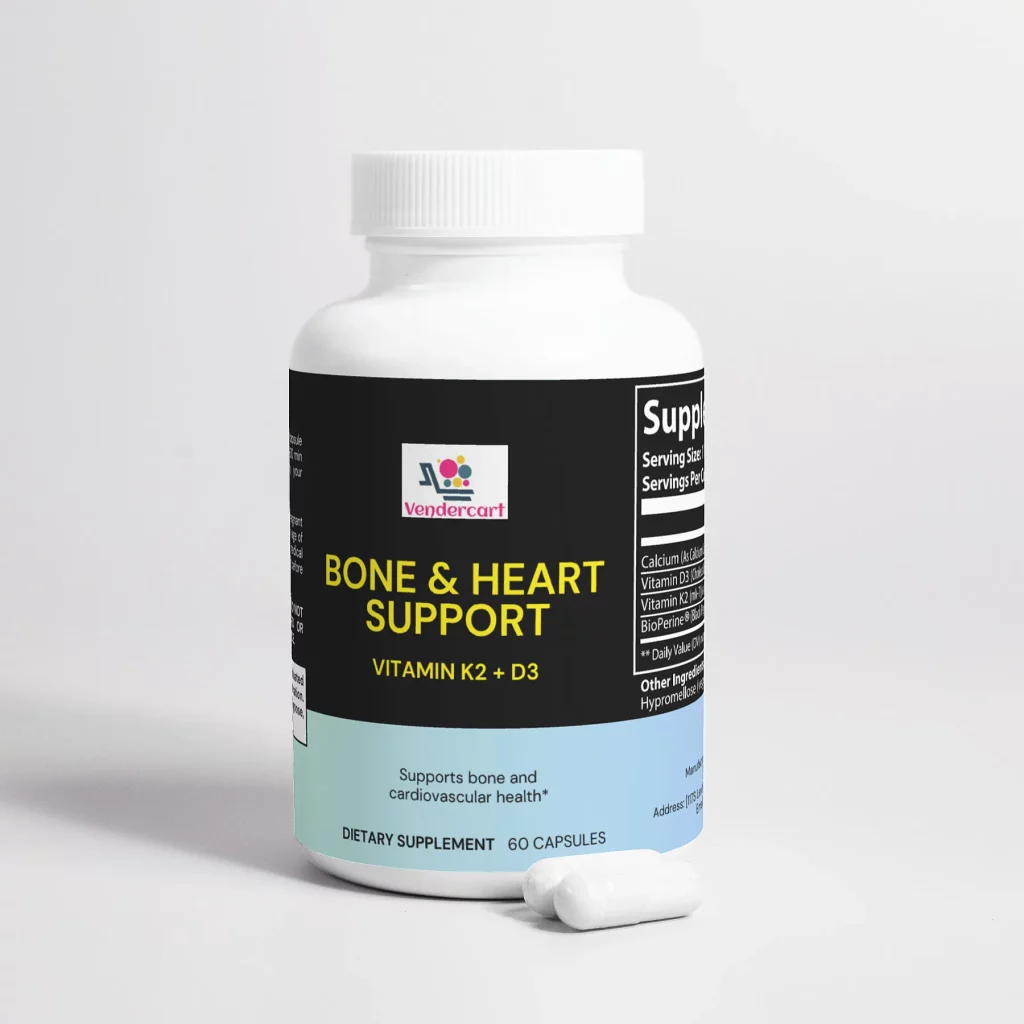
For a scientifically balanced formulation designed to maximize absorption and support arterial flexibility, try our Vitamin D3 K2 for Bone & Heart Support. Make sure your heart has the support it actually needs.
